Top Leadership Trends for 2026: What Every CXO Must Know
There is a quiet shift happening inside boardrooms.
It doesn’t announce itself with dramatic headlines or sweeping declarations. Instead, it reveals itself in subtle ways—in the questions leaders are asking, the anxieties they are managing, and the decisions they are postponing just long enough to gather more clarity. The nature of leadership is changing, not in theory, but in practice.
Across industries, from technology firms in Bengaluru to manufacturing giants in Pune, leadership conversations have moved beyond growth targets and operational efficiency. They are now centered on adaptability, emotional intelligence, trust, and speed. In the middle of these conversations sits Paul Robinson, a corporate motivational speaker in India who has spent nearly two decades working with management teams across multinational companies, helping them navigate change, uncertainty, and transformation.
“In every CXO room I walk into,” Paul often says, “the question is no longer ‘How do we grow?’ It’s ‘How do we stay relevant while everything changes faster than we can predict?’”
The answer lies in understanding the leadership trends shaping 2026.
1. Upskilling Is the New Basic
There was a time when learning was episodic—a workshop here, a certification there. Today, learning is continuous, almost relentless.
According to the World Economic Forum, nearly half of all employees will require reskilling by 2027 due to the rapid adoption of technology and automation. But numbers alone don’t capture the urgency. What’s changing is not just the skillset—it’s the mindset.
Paul recalls a leadership session with a global IT firm where a senior executive admitted, “I feel like I’m becoming obsolete in my own role.” It wasn’t a lack of experience. It was the pace of change.
Artificial Intelligence, especially agentic systems and co-pilots, is redefining how work gets done. Tasks that once required hours of human effort are now completed in minutes. But the real shift is not in efficiency—it’s in expectation. Leaders are expected to not just understand technology, but to integrate it into thinking, decision-making, and execution.
Upskilling is no longer a competitive advantage. It is survival.
The leaders who thrive are not necessarily the most knowledgeable—they are the most adaptable. They are willing to unlearn deeply ingrained habits, relearn new frameworks, and learn faster than their environment evolves. It is a paradox of modern leadership: the more experienced you are, the more willing you must be to let go of what once made you successful.
2. EQ Is More Important Than IQ
For decades, leadership was synonymous with intelligence. The ability to analyze data, make strategic decisions, and outthink competitors defined great leaders.
But something changed.
Machines began to think.
With AI systems capable of processing vast amounts of data, generating insights, and even predicting outcomes, cognitive intelligence is no longer a differentiator. What remains uniquely human is emotional intelligence.
Research from Harvard Business Review consistently highlights that leaders with high emotional intelligence outperform others in areas like team engagement, conflict resolution, and decision-making under pressure.
Paul often tells a story about a leadership team navigating layoffs. “The numbers made sense,” he says. “But leadership is not just about numbers—it’s about people who are affected by those numbers.”
In uncertain times, employees don’t look for the smartest leader. They look for the most human one.
Empathy, psychological safety, and servant leadership are no longer soft skills—they are core leadership capabilities. Leaders must create environments where people feel heard, valued, and safe to contribute. This is especially critical in a world where uncertainty is the norm.
“The future leader,” Paul says, “is not the one who has all the answers, but the one who can hold space for difficult questions.”
3. Leadership and AI: A New Partnership
AI is not replacing leaders. It is redefining leadership.
The conversation is no longer about whether to adopt AI, but how to lead in an AI-enabled world. This requires a new set of mental models—how to collaborate with machines, how to interpret AI-generated insights, and how to balance human judgment with algorithmic recommendations.
According to McKinsey & Company, organizations that effectively integrate AI into their workflows can significantly improve productivity and decision-making speed. But the challenge is not technological—it is cultural.
Paul describes this shift as “from control to collaboration.” Leaders must move away from traditional command-and-control structures and embrace a more fluid, adaptive approach. AI becomes a partner in thinking, not just a tool for execution.
In one of his workshops, a CXO remarked, “AI gives us answers faster than ever. But it also forces us to ask better questions.”
That, perhaps, is the essence of leadership in 2026. Not knowing more, but questioning better.
4. More Signal, Less Noise
We are living in an age of information abundance. Every day, leaders are bombarded with reports, dashboards, emails, and meetings. The challenge is no longer access to information—it is discernment.
What matters is not how much you know, but what you choose to ignore.
Paul often uses a simple analogy: “If everything is important, nothing is.”
Execution speed today is directly linked to clarity. And clarity comes from focusing on signals—the insights that truly matter—while filtering out noise.
This becomes even more critical in a climate of uncertainty. With global layoffs, economic fluctuations, and shifting market dynamics, teams are often left navigating ambiguity. In such environments, trust becomes the currency of speed.
“When teams trust each other,” Paul explains, “decisions happen faster. Execution becomes smoother. And noise reduces naturally.”
Leaders must therefore create systems and cultures that prioritize clarity, alignment, and trust. This means fewer but more meaningful meetings, clearer communication, and a focus on outcomes rather than activity.
The leaders who succeed will be those who can cut through the noise and guide their teams with precision.
5. Strong Bonds Within Teams
Perhaps the most profound shift in leadership is happening at the human level.
The rise of remote work, accelerated by the pandemic, has changed how teams interact. While technology has enabled seamless communication, it has also reduced the depth of human connection.
At the same time, organizations are becoming more global. Teams are increasingly diverse, spread across geographies, and working across cultures. This creates both opportunity and complexity.
“The biggest challenge today,” Paul notes, “is not collaboration—it’s connection.”
High-performing teams are not just efficient. They are deeply connected. They operate on trust, mutual respect, and a shared sense of purpose.
This is where the concept of “wirearchy” comes in—a shift from hierarchical structures to interconnected, interdependent networks. In such systems, leadership is distributed. People lead from where they are, not just from where they sit in the hierarchy.
Startups often embody this model naturally. Their agility, speed, and collaborative culture allow them to respond quickly to change. Large organizations, on the other hand, often struggle with inertia.
The lesson is clear: adopt a startup mindset. Yes, it’s Day One.
This does not mean abandoning structure. It means embracing agility, encouraging initiative, and fostering a culture where ideas flow freely across levels.
Strong team bonds are not built through policies. They are built through shared experiences, open communication, and consistent leadership behavior.
The Role of the Corporate Motivational Speaker
In the midst of these shifts, the role of a corporate motivational speaker has evolved.
It is no longer about delivering high-energy talks that inspire momentary excitement. It is about creating meaningful experiences that shift perspectives, challenge assumptions, and drive action.
This is where Paul Robinson has carved a distinct space. His work with leadership teams across MNCs is not about motivation in the traditional sense. It is about transformation.
Through keynotes, workshops, and strategic sessions, he brings together insights from psychology, neuroscience, business strategy, and real-world experience. His sessions are designed to engage, provoke thought, and create lasting impact.
“Motivation,” he says, “is not about feeling good. It’s about thinking differently and acting decisively.”
You May Also Like
How to Lead with Questions: Unlocking the Power of Curiosity in Leadership
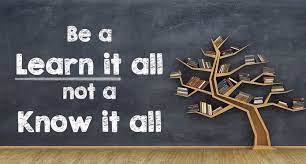
Are you a “learn it all or the know it all” leader?
