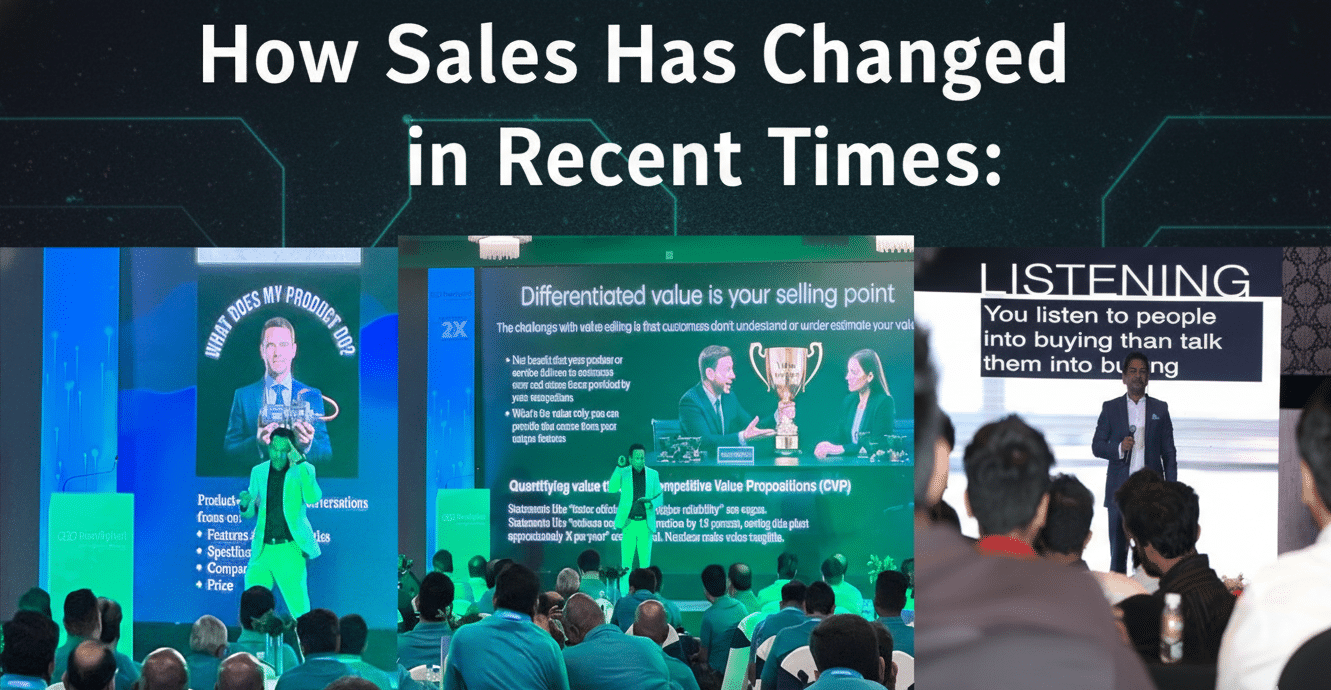
How Sales Has Changed in Recent Times
How Sales Has Changed in Recent Times: From Persuasion to Partnership in the Age of Information

If you have been in sales long enough, you don’t just notice change—you feel it. The shift is not incremental; it is tectonic. Having witnessed sales evolve since the 1990s, the contrast is stark. Back then, the salesperson was the primary source of information. Today, the customer often walks into the conversation already informed—sometimes overinformed. This single shift has rewritten the rules of selling.
In the 90s, the balance of power rested largely with the seller. Information asymmetry defined the transaction. Customers relied on salespeople to understand products, compare options, and make decisions. Brochures, presentations, and face-to-face conversations shaped perception. The salesperson controlled the narrative.
Today, that control has dissolved.
A modern buyer has access to an overwhelming volume of information—product comparisons, user reviews, expert opinions, pricing benchmarks, competitor offerings, and social proof—all available within minutes. According to a widely cited study by Gartner, B2B buyers spend only about 17% of their time meeting with potential suppliers during the purchase journey. The rest is spent researching independently or consulting peers. That statistic alone captures the essence of the shift: the buyer is no longer dependent on the seller for information.
But paradoxically, more information has not simplified decisions—it has complicated them.
This is where the modern salesperson steps in, not as a persuader, but as a filter. The role has evolved from being a source of information to a curator of insight. Cutting through noise and delivering clarity has become the new currency of sales.
From Go-Getters to Go-Givers
There was a time when the archetype of a successful salesperson was the aggressive closer—the relentless go-getter who pushed hard, handled objections with force, and drove transactions to closure. That persona was celebrated. Sales training programs glorified persistence, pressure tactics, and the art of “closing.”
Today, that model is increasingly ineffective.
Modern customers are resistant to pressure. They are skeptical of overt persuasion. They value authenticity, transparency, and relevance. In this environment, the go-getter has given way to the go-giver.
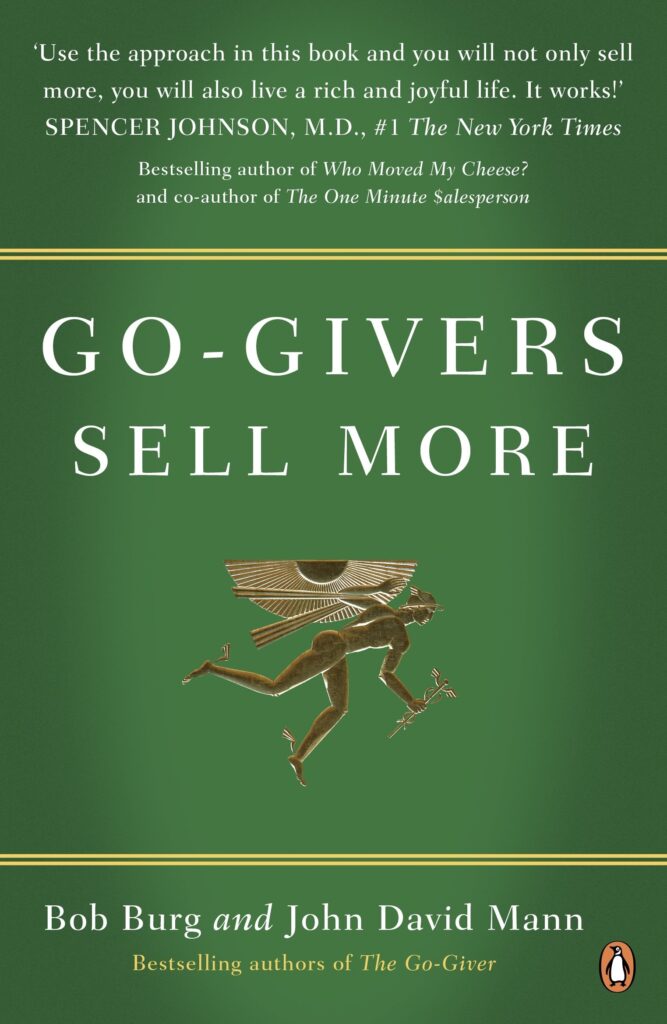
The go-giver operates from a fundamentally different mindset. Instead of asking, “How do I close this deal?” the question becomes, “How do I create value in this interaction?” This shift is subtle but profound. It transforms the entire sales experience.
Consider the example of a SaaS company selling enterprise software. A decade ago, the sales process might have revolved around product demonstrations and feature comparisons. Today, leading companies like HubSpot or Salesforce invest heavily in educational content—blogs, webinars, certifications, and tools that help customers understand their own challenges better. By the time a prospect engages with a salesperson, they are already informed—and often inclined toward a solution.
The sale is not forced; it is facilitated.
The Death of Narrative Control
In earlier decades, companies had near-complete control over how their products and services were perceived. Marketing messages were carefully crafted, and customers had limited means to verify claims. If a brochure said a product was “industry-leading,” it often went unchallenged.
That era is over.
Today, narrative control is distributed. Customer reviews, social media conversations, independent forums, and influencer opinions collectively shape perception. A single negative review can influence buying decisions as much as a polished marketing campaign.
Take the example of the hospitality industry. Platforms like TripAdvisor and Google Reviews have fundamentally changed how hotels are evaluated. A hotel’s official website may promise luxury and comfort, but a handful of candid guest reviews can either validate or dismantle that narrative instantly.
For sales professionals, this means one thing: credibility cannot be manufactured; it must be earned.
Transparency is no longer optional. Authenticity is not a strategy; it is a necessity.

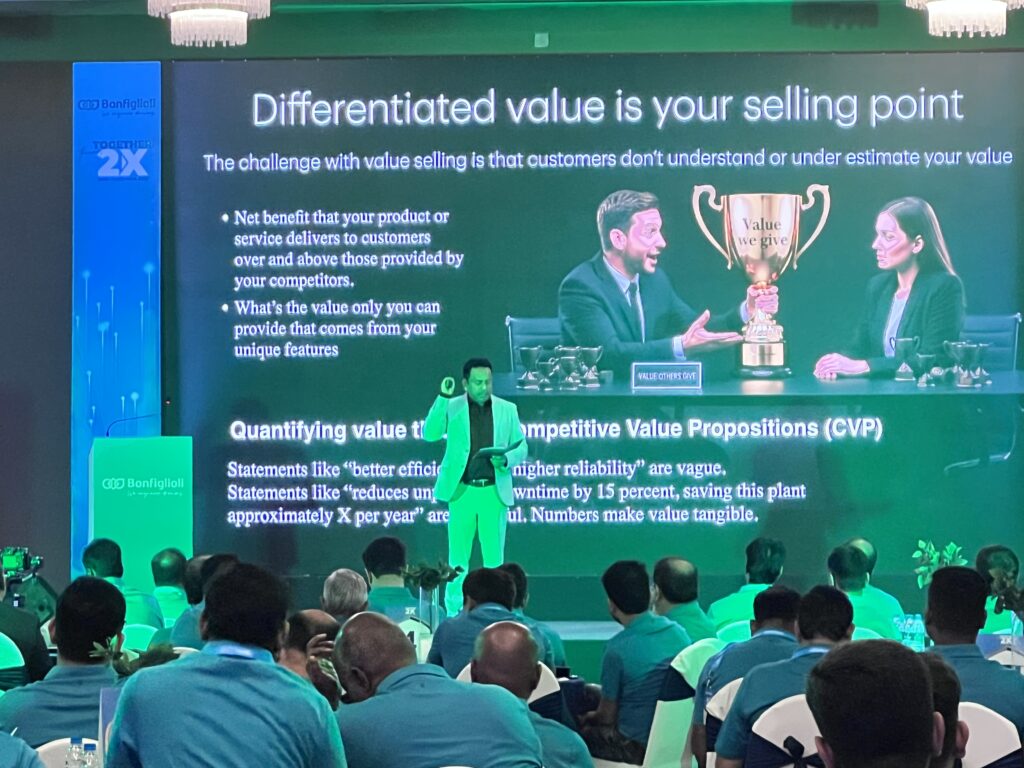
Sales as a Three-Stage Process
Modern sales is no longer a linear pitch-to-close journey. It is a multi-stage process that integrates education, relationship-building, and decision facilitation.
1. The Education Phase
This is where sales begins—long before any direct interaction. In this phase, sales and marketing converge. Content becomes the primary vehicle for engagement. Blogs, whitepapers, videos, podcasts, and social media posts serve as touchpoints that educate the customer.
The objective is not to sell, but to inform.
A McKinsey report highlights that companies excelling in content-driven engagement generate significantly higher lead conversion rates. Why? Because educated customers make confident decisions. When a brand consistently provides valuable insights, it positions itself as a trusted authority.
For example, in the financial services sector, firms that publish regular market insights and investment guides often attract more qualified leads than those relying solely on traditional sales pitches.
Education builds trust. Trust opens the door to conversation.
2. The Relationship Phase
Once engagement begins, the focus shifts to building a relationship. This is where the salesperson becomes a consultant. The goal is to understand the customer’s context, challenges, and aspirations.
In this phase, listening becomes more important than speaking.
A study by LinkedIn found that 88% of B2B buyers only engage with sales professionals who are perceived as trusted advisors. Trust is built not through persuasion, but through relevance. When a salesperson demonstrates a deep understanding of the customer’s problem—and offers insights that add value—the dynamic changes.
Consider a real-world anecdote from the manufacturing sector. A sales professional working with an automotive client noticed inefficiencies in the client’s supply chain—an issue unrelated to the product being sold. Instead of pushing the product, he shared insights and connected the client with a logistics expert. That gesture built immense trust, eventually leading to a long-term partnership.
The sale was not the result of a pitch, but of a relationship.
3. The Decision Phase
By the time the conversation reaches this stage, much of the decision-making has already occurred. The customer is informed, trust has been established, and the options are clear.
The role of the salesperson now is to facilitate the decision.
This means removing friction, addressing final concerns, and ensuring alignment. There is no need for aggressive closing techniques. The focus is on helping the customer make the right choice.
Interestingly, research by Forrester suggests that buyers are more likely to choose vendors who simplify the decision-making process rather than those who overwhelm them with information. Simplicity becomes a competitive advantage.
And importantly, the sale does not end here.
The Continuum of Sales: After the Sale
In the modern landscape, the sale is not a conclusion; it is a transition. The post-sale experience—onboarding, support, and ongoing engagement—plays a critical role in shaping future business.
Customer success has emerged as a vital function. Companies like Amazon have built their reputation not just on selling products, but on delivering seamless post-purchase experiences. Fast delivery, easy returns, and responsive support have become key differentiators.
For B2B organisations, the stakes are even higher. A satisfied client can lead to repeat business, referrals, and long-term partnerships. Conversely, a poor post-sale experience can erode trust and damage reputation.
This is where the integration of marketing, sales, and service becomes essential. These functions can no longer operate in silos. They must work as a unified system focused on the customer journey.
The Rise of Nuanced Selling
Not all sales are created equal. The strategies that work for commodity products differ significantly from those required for high-value, complex solutions.
Impulse buying, for instance, is driven by emotion and convenience. E-commerce platforms optimise for speed and ease, reducing decision friction. On the other hand, enterprise-level purchases involve multiple stakeholders, longer decision cycles, and detailed evaluations.
This diversity demands a nuanced approach.
Sales professionals must adapt their strategies based on the product, the market, and the buyer persona. There is no one-size-fits-all model. The ability to read context and respond accordingly is what separates average performers from exceptional ones.
Sales in the Era of Social Media and AI
The digital revolution has added new layers to the sales process. Social media platforms have become powerful tools for engagement, branding, and lead generation. Sales professionals are now expected to build personal brands, share insights, and engage with audiences online.
LinkedIn, for example, has transformed into a critical platform for B2B sales. Thought leadership content, meaningful interactions, and consistent visibility can significantly influence buying decisions.
At the same time, Artificial Intelligence is reshaping how sales is executed. AI-driven tools can analyse customer behaviour, predict buying patterns, and automate routine tasks. This allows sales professionals to focus on higher-value activities—building relationships and delivering insights.
However, AI also raises the bar. When machines can provide data and analysis, the human element becomes even more critical. Empathy, creativity, and judgment—qualities that AI cannot replicate—become the defining traits of successful salespeople.
The Constant: Relationships Still Matter
Amid all this change, one fundamental truth remains unchanged: relationships are at the heart of sales.
In B2B environments, where decisions are complex and stakes are high, trust plays a pivotal role. While loyalty may be more fluid in today’s competitive landscape, strong relationships continue to influence decisions.
A Harvard Business Review study found that emotionally connected customers are more than twice as valuable as highly satisfied customers. This underscores the importance of connection—not just satisfaction.
Relationships are built over time, through consistent value delivery, honesty, and mutual respect. They cannot be rushed or manufactured.
The Future of Sales
Sales has evolved from persuasion to partnership. It is no longer about convincing customers to buy, but about helping them make better decisions. The modern salesperson is an educator, a consultant, and a problem-solver.
As markets continue to evolve, this transformation will only accelerate. The organisations that succeed will be those that embrace this new paradigm—investing in their people, aligning their functions, and focusing relentlessly on customer value.
And for those who have been in sales long enough to witness this journey, one thing is clear: while the tools, techniques, and technologies may change, the essence of sales remains deeply human.
It is, and always will be, about understanding people—and helping them move forward with confidence.
ABOUT THE AUTHOR

Paul Robinson is a leading corporate motivational speaker in India who works extensively with sales teams to elevate their effectiveness, confidence, and results. With a strong foundation in real-world selling, he goes beyond theory to address the practical challenges sales professionals face—pipeline pressure, client objections, competitive markets, and the need to consistently deliver numbers.
He is a sought-after keynote speaker for sales summits in india, annual sales kick-offs, and dealer meets, where his sessions focus on high-impact themes such as value selling, relationship-driven sales, and sustained sales motivation. Paul helps teams shift from transactional selling to consultative conversations—enabling them to position value, build trust with clients, and close deals with conviction. His approach blends mindset, skillset, and execution discipline, ensuring that motivation translates into measurable performance.
Whether it’s energising a sales force at the start of the year or equipping teams with sharper selling strategies, Paul’s sessions are designed to create clarity, drive action, and improve results on the ground. To book Paul Robinson for your next sales conference or training session, visit www.paulrobinson.in.

You May Also Like

The Art of Leading Yourself: The Foundation of Personal Leadership

How to Be More Empathetic at Work: A Leadership Guide to Listening, Respect, and Humanizing the Workplace